
Hoʻiwaiwai
hoʻi: to leave, go or come back; to cause to come back; to enter, as an institution or last resting place.
waiwai: goods, property, assets, valuables, value, worth, wealth, importance, benefit, estate, use; useful, valuable, rich, costly, financial.
Hoʻowaiwai: to enrich, bring prosperity.
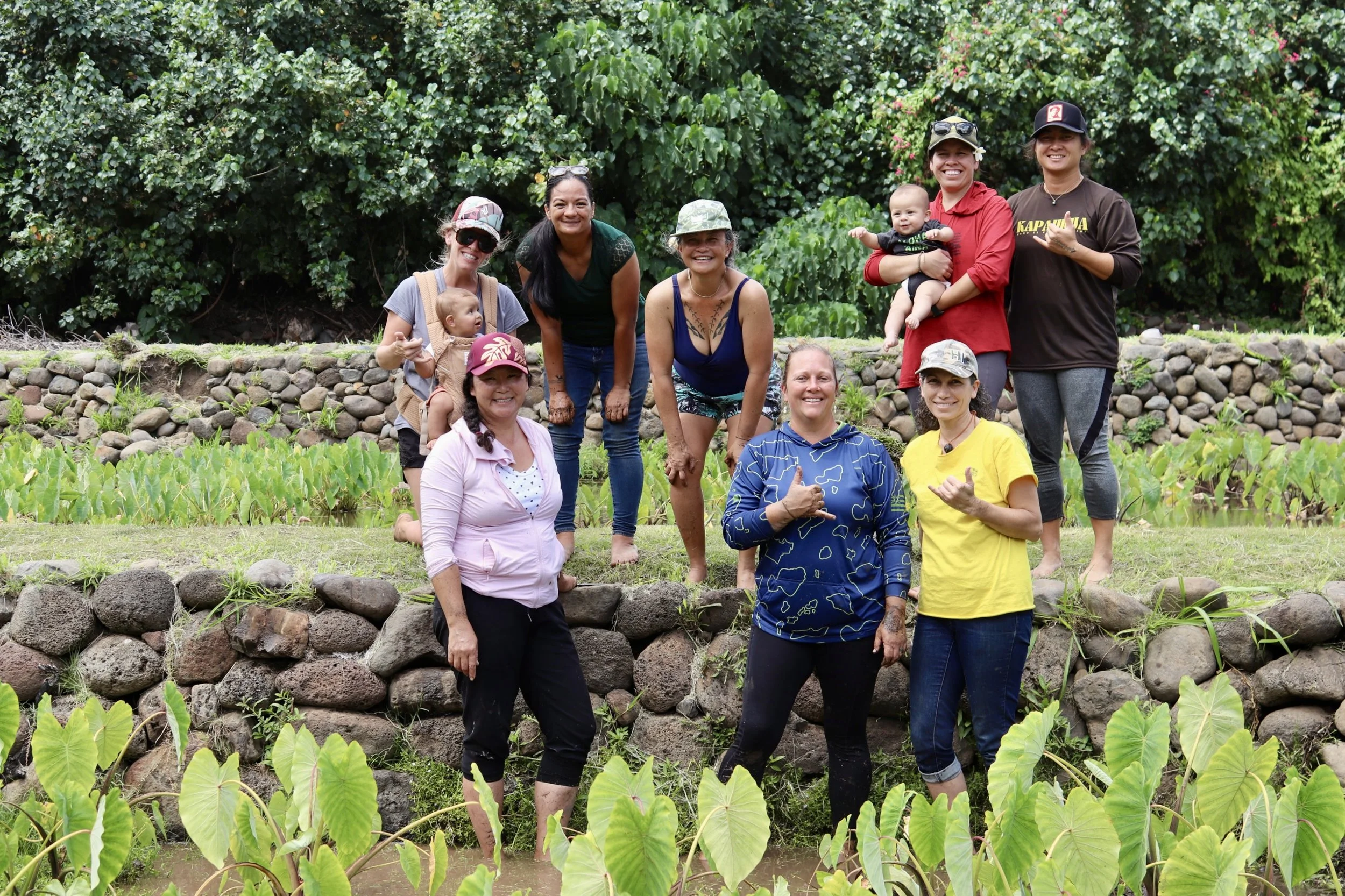
The Hoʻiwaiwai process is ʻāina centered philanthropy in practice. Through our first two cohorts, we placed flexible, trust-based resources directly in the hands of Māui island wāhine leaders and grassroots stewards — then stepped back and trusted the process.
What happened next was not what conventional philanthropy would have predicted or allowed. Those leaders redistributed support in ways that extended far beyond the original intent: mobilizing youth to defend water rights, sustaining cultural practices that hold community together across generations, rebuilding food systems that funders had never thought to fund. They demonstrated that when wealth is returned without conditions, community intelligence fills the space.
This is what waiwai looks like when it moves.
"You're not asking people to continuously prove why what they're doing has value. Continuously prove — wait, we proved that 10 years ago. Where were you? 20 years ago. Our kūpuna would say that."
— Kauwila Hanchett, on where the model needs to go"We don't always have to fight for things that you deserve, for things that you need to feed your people and feed yourself. It's about feeding you, too."
— Henohea Kāne, on learning to receive"Just the fact that it was like, there you go. Stress free. That's like, unheard of. I'm pretty sure you guys are the only people that do that."
— Karyn Kanekoa, on the nature of the funding"If we don't define it, other people are defining it for us. And right now, we have so many strong, culturally-rooted, ʻāina-based organizations. Why can't we convene and put out our declaration? This is what we expect of funders. This is the standard."
— Hōʻike discussion, on defining community on their own terms